Encryption Layers Fueling Entry Pathways into Multi-Table Events and Progressive Reel Challenges
Written by Devon Schröder · Jul 8, 2026

Encryption Layers Fueling Entry Pathways into Multi-Table Events and Progressive Reel Challenges
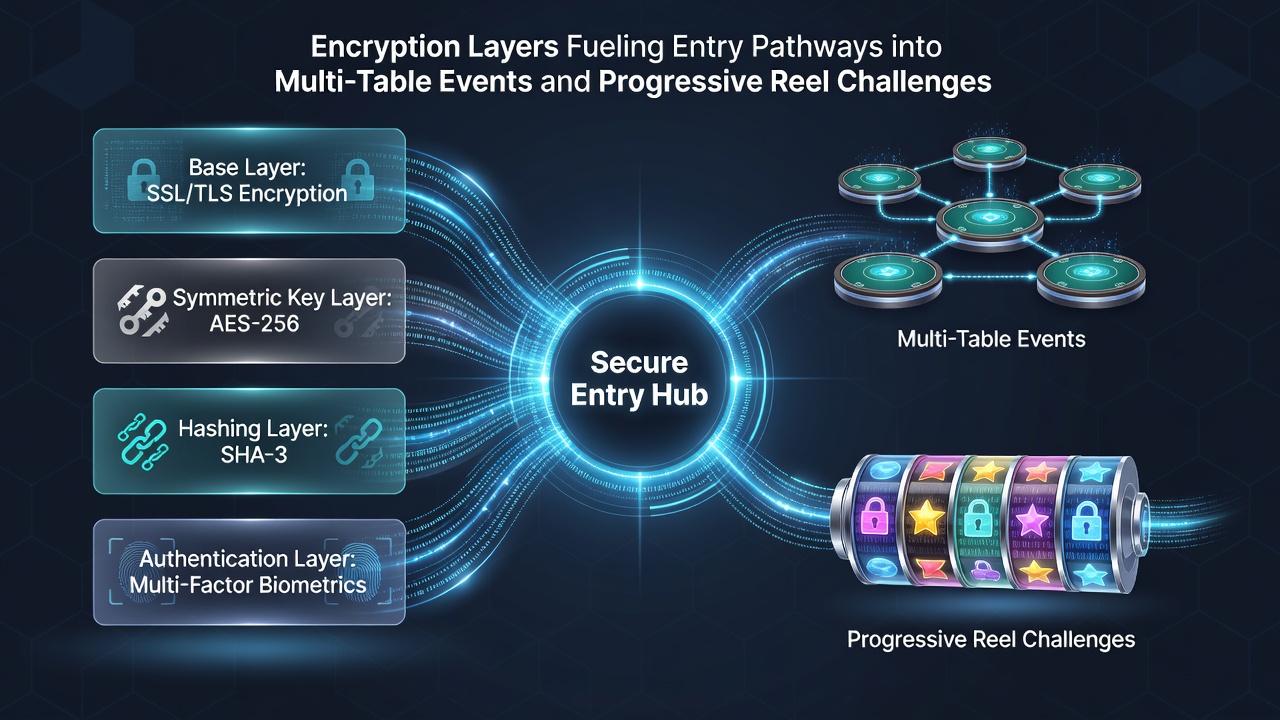
Encryption protocols form the backbone of secure access systems that allow players to enter multi-table poker events and progressive reel challenges without exposing sensitive account details or transaction histories, and industry reports from July 2026 show continued adoption of layered security models across regulated platforms. These structures combine symmetric and asymmetric encryption methods to authenticate users at multiple checkpoints while maintaining session integrity throughout extended play periods. Observers note that such frameworks have expanded significantly since earlier implementations because operators must handle simultaneous entries into tournaments that feature dozens of tables alongside slot progressions that accumulate jackpots across networked machines.
Core Components of Layered Encryption in Gaming Access
Multiple encryption layers typically begin with transport layer security protocols that encrypt data in transit between player devices and game servers, then proceed to application-level authentication that verifies identities against stored cryptographic keys. Researchers at institutions like the University of Nevada's gaming technology programs have documented how these sequential barriers prevent unauthorized interception during the initial login phase that grants entry to multi-table competitions. Data from regulatory filings indicate that platforms processing thousands of concurrent sessions rely on rotating keys updated at fixed intervals to reduce exposure risks, and this approach supports seamless transitions when participants move between different tournament tables or activate progressive reel features.
Additional layers incorporate end-to-end encryption for in-game communications and wallet interactions, which ensures that progressive jackpot contributions remain isolated from external monitoring. According to figures released by the Australian Communications and Media Authority, operators in licensed jurisdictions reported a measurable uptick in encrypted transaction volumes during the first half of 2026, reflecting broader integration of these systems into both poker and slot environments. Those systems allow players to register for events that span multiple tables without repeated re-authentication, while progressive reel challenges update in real time across connected devices.
Application to Multi-Table Poker Tournaments
Multi-table events demand continuous verification as participants shift between tables and adjust to changing blind structures, which creates opportunities for encryption to manage dynamic session tokens that expire after predetermined windows. Industry associations such as the European Gaming and Betting Association have tracked how encrypted entry pathways streamline registration processes that previously required separate logins for each table segment. Players gain access through a single authenticated channel that maintains encryption across all active tables, and this reduces latency while preserving compliance with jurisdictional data protection standards.
Case examples from North American operators illustrate the pattern: one platform integrated advanced key management servers that automatically renew encryption certificates during long-running tournaments, allowing participants to focus on strategy rather than reconnection steps. Figures reveal that such enhancements correlated with higher completion rates for events scheduled in mid-2026, particularly those drawing international fields that cross multiple time zones. The same infrastructure supports spectator modes where encrypted feeds deliver updates without compromising player privacy.
Support for Progressive Reel Challenge Mechanics
Progressive reel challenges operate on networked contribution systems that pool bets across wide geographic areas, requiring encryption to safeguard the growing prize pools and individual player contributions from tampering. These mechanics trigger at random intervals or after specific symbol combinations, and layered security protocols ensure that the random number generators feeding those outcomes remain isolated behind cryptographic walls. Reports compiled by the Nevada Gaming Control Board highlight steady growth in encrypted progressive linkages during 2026, with operators noting that secure pathways enable simultaneous participation from mobile and desktop clients without synchronization failures.
Entry into these challenges often occurs through the same authentication sequence used for poker events, which creates shared infrastructure efficiencies. Observers have documented instances where a single encrypted session grants access to both a multi-table poker tournament and linked progressive slots, with real-time balance updates protected at each layer. This convergence supports cross-promotional features that appear in operator announcements from various regions, including Canadian provincial regulators who track compliance metrics tied to encryption standards.
Regulatory and Technical Developments in Mid-2026
July 2026 saw several licensing bodies update guidance on encryption minimums for platforms offering complex game formats, with emphasis on audit trails that log every key exchange during player entries. Academic papers presented at gaming technology conferences examined the performance overhead of additional layers and found that optimized implementations maintain sub-second response times even under peak tournament loads. Those findings align with operational data shared by trade groups representing developers of both poker software and slot engines.
Platforms continue to refine hybrid models that blend traditional public-key infrastructure with newer post-quantum algorithms in anticipation of evolving computational threats. Such adaptations ensure that entry pathways into multi-table events and progressive reel challenges remain viable as participant numbers scale, and regional authorities in Asia-Pacific markets have begun referencing these standards in their own compliance checklists.
Conclusion
Encryption layers continue to underpin reliable access mechanisms that connect players to sophisticated multi-table poker formats and progressive reel systems, supported by ongoing technical refinements and regulatory oversight across multiple jurisdictions. Data from 2026 demonstrates measurable integration of these security components into daily operations, while research institutions and industry bodies provide benchmarks for future enhancements. The resulting frameworks enable sustained growth in event participation without compromising the integrity of either tournament structures or jackpot progressions.